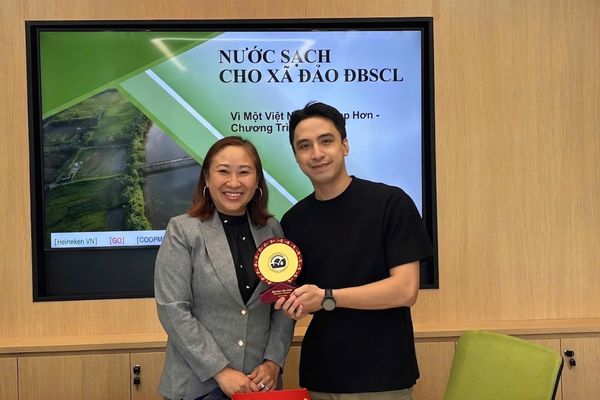
Circular Clean Water Model in Vinh Long Island Commune: A Two-Year Journey of Building Sustainable Climate Adaptation Capacity
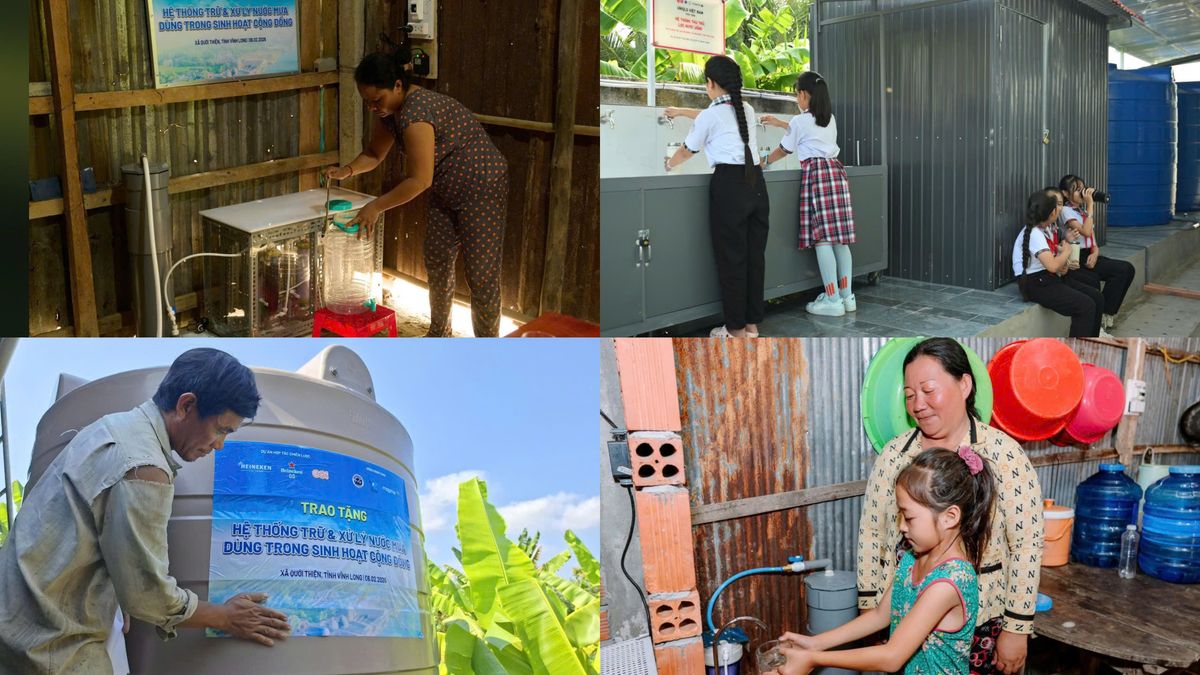
The paradox of “thirsting” for freshwater amid rivers and canals
In the context of increasingly severe climate change, island communes and islet areas in the downstream Mekong Delta are among the most vulnerable. From January to May each year, reduced upstream flows combined with high tides push saltwater deeper inland for up to six months, seriously affecting natural domestic water sources. Due to their geographical characteristics, with rivers and canals surrounding them on all sides, investment in centralized water supply infrastructure from the mainland to island communes faces numerous technical and financial barriers.
In response to this urgent situation, over two consecutive years from 2025 to 2026, Tra Vinh University, represented by the STARS Water Center, Fast Retailing Group through UNIQLO, HEINEKEN Vietnam, and the connecting and coordinating organization Map Me jointly implemented a series of climate-adaptive clean water support activities in island communes of Vinh Long Province. This meaningful journey began by addressing urgent household-level needs and advanced toward a breakthrough step: building a sustainable circular school-based education model.
A two-year journey from household-level support to a circular “green school”
Phase 2025: Placing households at the center in Long Hoa Islet
The journey began in 2025 in Long Hoa Islet, a rural area that still faced many limitations in accessing safe water sources. The program donated 10 rainwater harvesting, storage, and treatment systems to disadvantaged households, helping them significantly reduce the financial pressure of purchasing bottled water and buying water transported by boats during the peak dry and saline season.
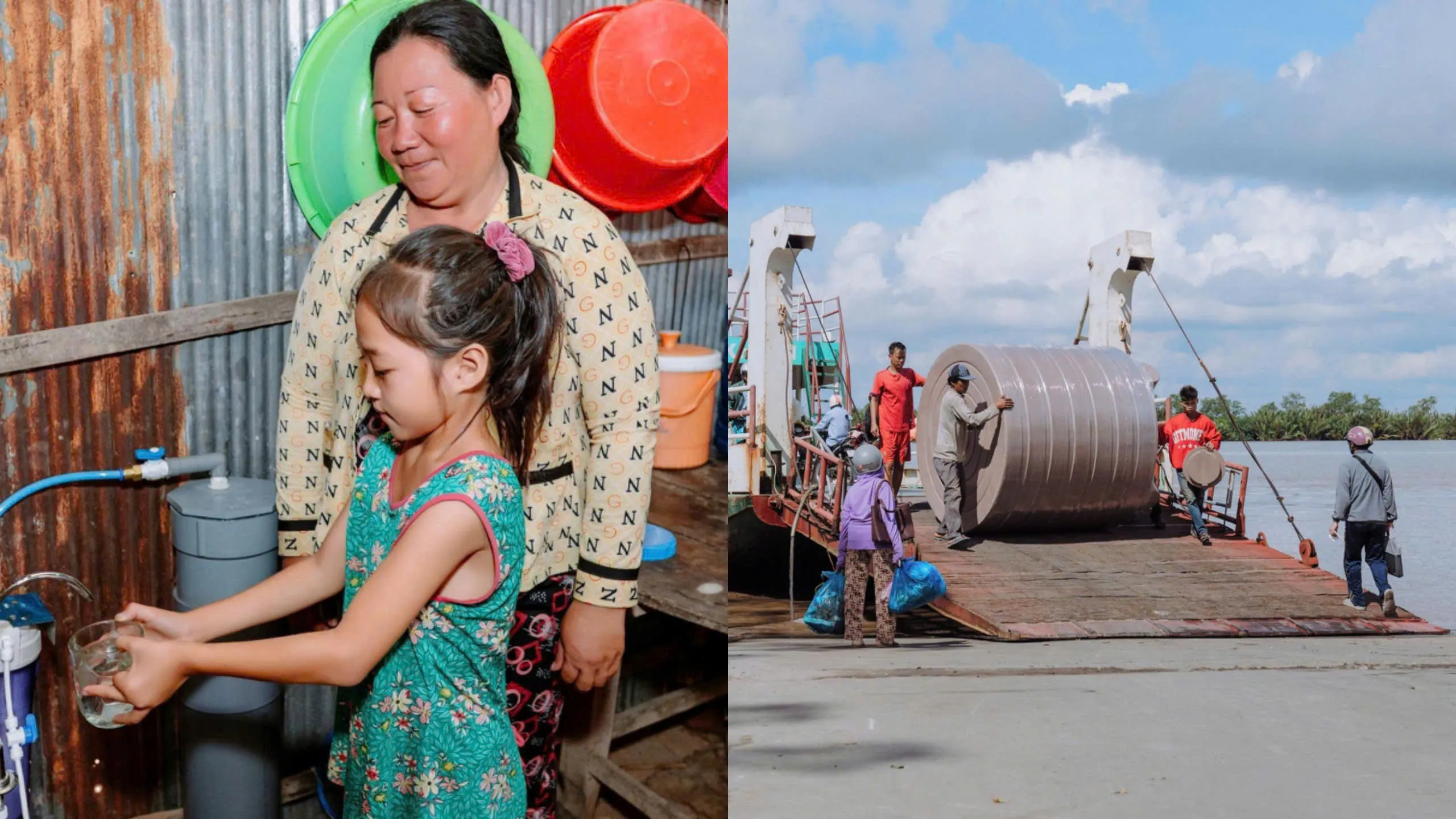
Phase 2026: Dual impact in Quoi Thien Islet and Hoa Minh Commune
In 2026, the program expanded its scale by installing six additional rainwater harvesting and storage systems for vulnerable households in Quoi Thien island commune. This area has a distinctive profile: a prosperous orchard-based economy with an average per capita income of VND 85–95 million per year in 2025 and a poverty rate below 2%, yet it remains deeply vulnerable in terms of domestic water sources because of its location in the middle of the Co Chien River, where saline conditions persist throughout the dry season.
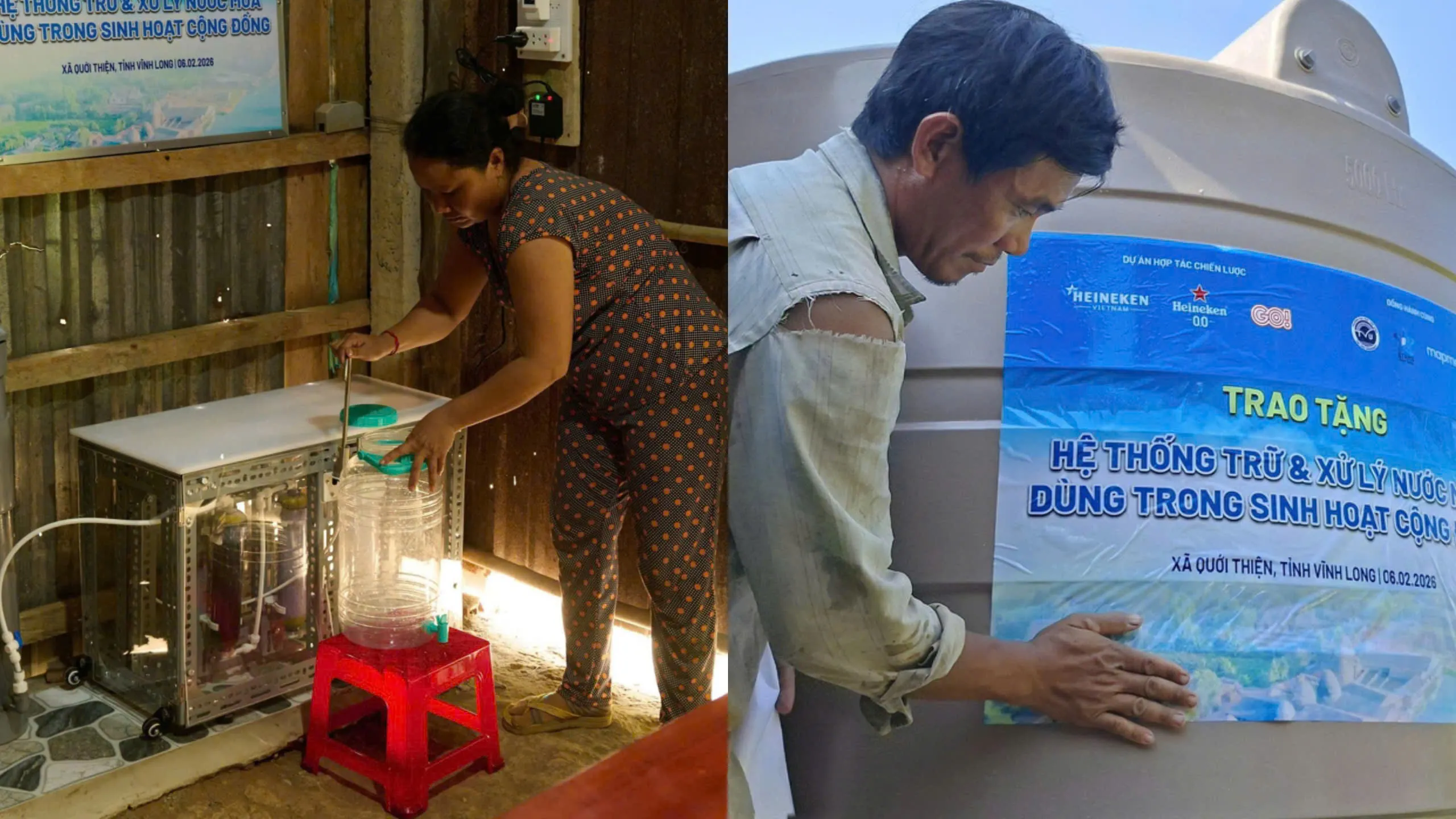
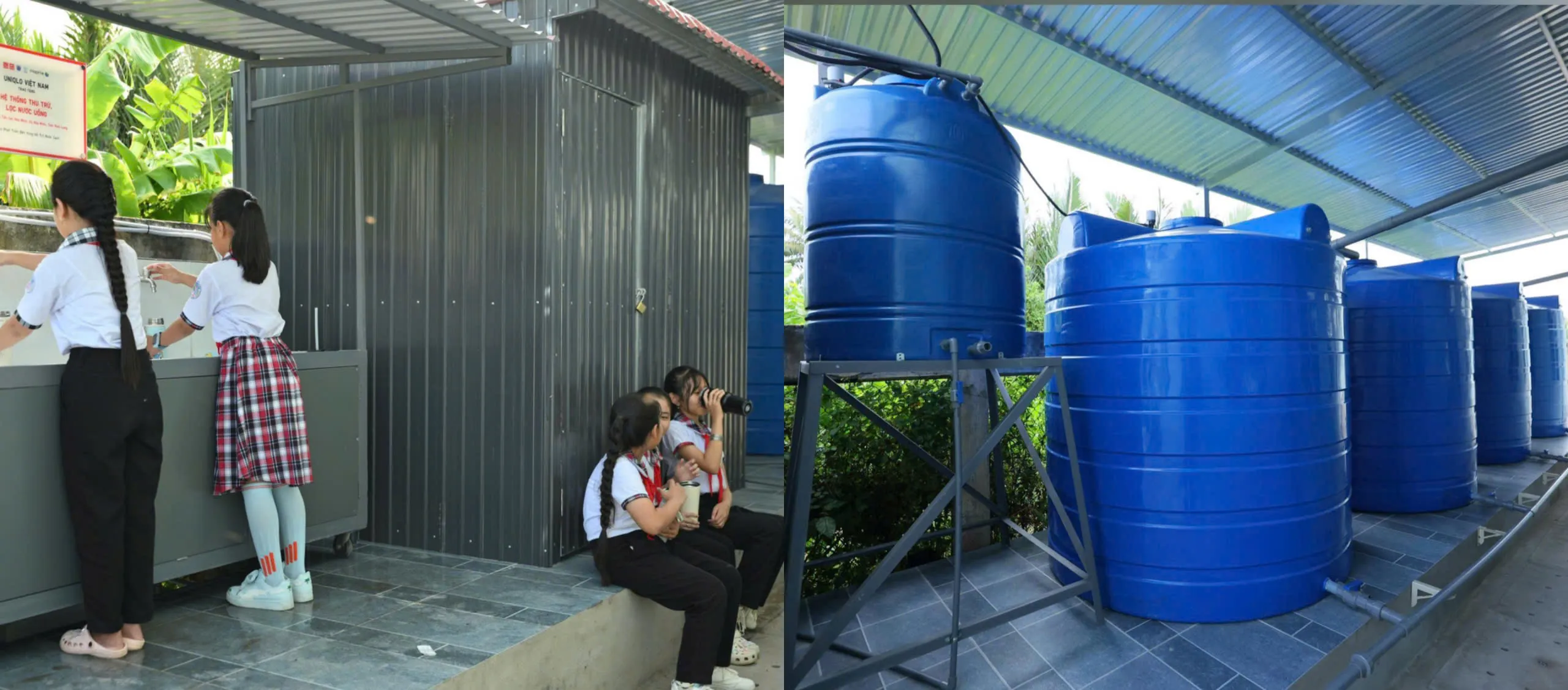
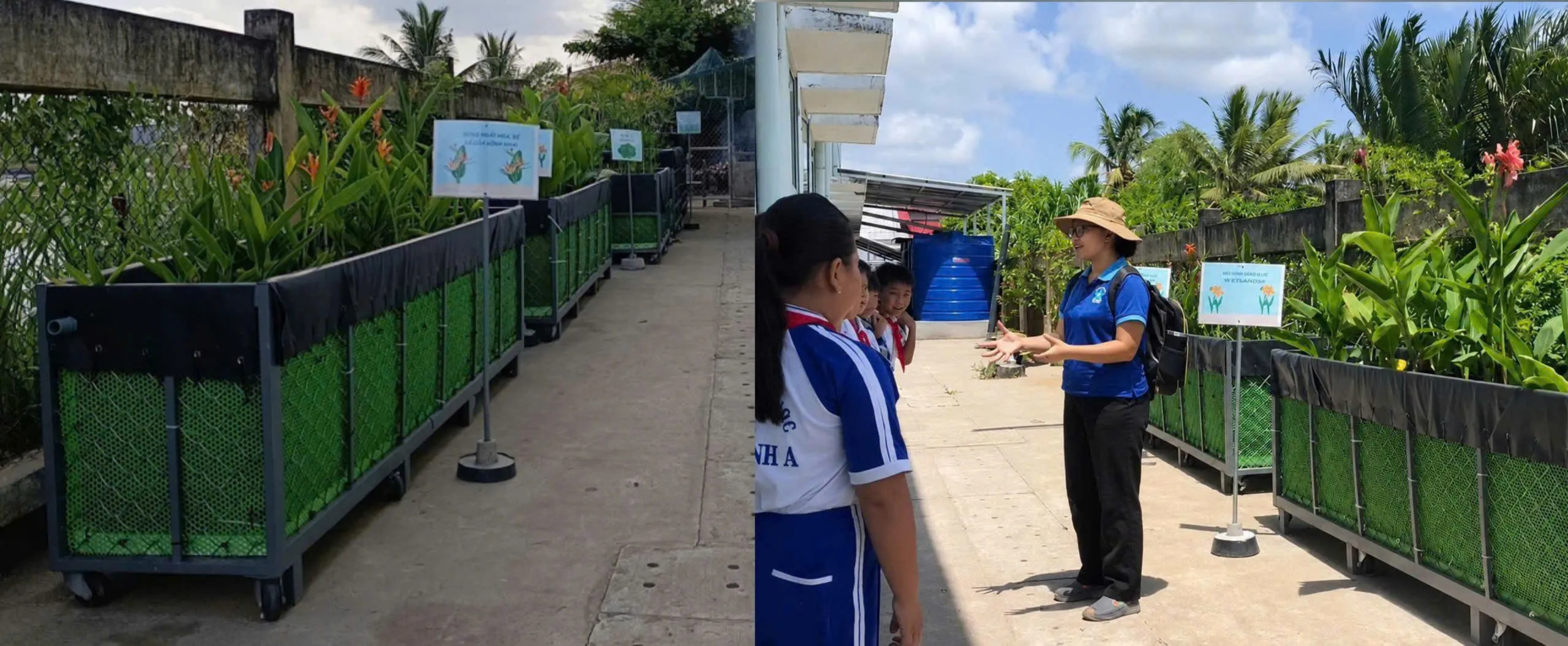
The strategic and breakthrough shift in 2026 was the development of a large-scale integrated circular water management model at Hoa Minh Primary School in Hoa Minh Commune. The model establishes a closed-loop water cycle through three closely connected technical components:
- Water harvesting, storage, and treatment: Rainwater and local tap water are collected and treated through an advanced filtration system, with strict quality control to meet safe drinking water standards directly at the tap for students and teachers.
- Constructed wetland system: All wastewater generated from school activities is not discharged directly into the environment. Instead, it is directed into a natural biological treatment system that uses native aquatic plants, microorganisms, and filter media to remove organic pollutants with almost zero operating cost.
- Water reuse: After treatment, the cleaned water meets agricultural-use standards and is circulated for irrigation, tree care, and landscape maintenance within the school.
Voices from stakeholders: When resources meet specialized solutions
The success of the model is the result of deep mutual understanding among the technical unit, corporate partners, and a young coordinating team.
From a professional perspective, Dr. Tran Thi Ngoc Bich, Director of the STARS Water Center at Tra Vinh University, shared:
“The core objective when we designed this model was not merely to filter water, but to apply Nature-based Solutions to optimize local resources. The combination of drinking water treatment technology and constructed wetlands helps reduce maintenance costs while protecting the fragile ecosystem of island communes from the dual pressures of natural disasters.”
As the connecting bridge throughout the two-year journey, Ms. Helly Tong, also known as Tong Khanh Linh, representative of Map Me Co., Ltd., said:
“Over the past two years, what Map Me has persistently pursued is finding a common voice among all parties to create a systemic solution. From emergency support for individual households to a circular school model, we understand that sustainability only comes when the community can truly take ownership of its water sources. Map Me is proud to have successfully connected the knowledge of scientists with strong ESG commitments from leading enterprises to deliver real value for the future of the Mekong Delta.”
Representing financial resources and strategic vision, Mr. Yukihiro Nitta, General Manager in charge of Sustainability Development at Fast Retailing Group, stated:
“The ‘Clean Water Support’ project reflects Fast Retailing Group’s strategic vision aligned with its ‘Action for Water’ objective. In Phase 4, we aim to improve the school environment, seeing this as a sustainable solution. We hope this ecosystem will become a long-term companion, creating a green and safe learning environment that comprehensively supports students.”
Sharing the same commitment to sustainable development, Mr. Nguyen Huu Hoang, representative of HEINEKEN Vietnam, said:
“Supporting the delivery of clean water to island communes in Vinh Long not only addresses immediate domestic water needs for local residents during the dry and saline season, but also contributes to efforts to strengthen the Mekong Delta’s capacity to adapt to climate change. We believe that when stakeholders join hands, the positive impacts created for society will be multiplied.”
A new face for island communes and future educational value
Beyond solving an infrastructure challenge, the circular model at Hoa Minh Primary School has transformed the school campus into a visual “living lab” for STEM and environmental education. Students can observe the regeneration of water every day, thereby developing awareness of resource protection from an early age.
Mr. Nguyen Thanh Hai, Principal of Hoa Minh Primary School, emotionally shared:
“For many years, the concern over clean water for the school during the dry and saline season has always been a major challenge for us. Since this circular clean water model began operating, teachers and students have felt as if a heavy burden has been lifted. Students now have clean water to drink directly from the tap, and the school has additional green spaces nourished by recycled water. The constructed wetland system using native plants has become a lively STEM model. Instead of dry theoretical lessons, students can see and understand the life cycle of water, helping them become more conscious of environmental protection.”
Recognizing the project’s practical contributions to local social welfare, Mr. Nguyen Thanh Can, Vice Chairman of the Hoa Minh Commune People’s Committee, emphasized:
“Hoa Minh is an island commune facing many challenges in clean water infrastructure due to severe drought and saltwater intrusion. This project carries tremendous social welfare significance. It not only provides safe water for schools and vulnerable households, but also opens up a model for how communities can proactively adapt to natural disasters. On behalf of the local authorities, we sincerely thank the sponsors and scientists for bringing this meaningful project to our islet community.”
Lessons learned from the multi-stakeholder partnership model
The journey of bringing clean water to island communes in Vinh Long from 2025 to 2026 is a clear demonstration of the effectiveness of the Public–Private Partnership model in addressing global social challenges. When corporate resources from UNIQLO and HEINEKEN are closely combined with academic knowledge from Tra Vinh University, the connecting capacity of young people from Map Me, and the commitment of local authorities, the project goes far beyond a conventional charity activity. It becomes a model of sustainable development that deserves further study and replication in disaster-affected areas across the country.
-600x400.jpg)