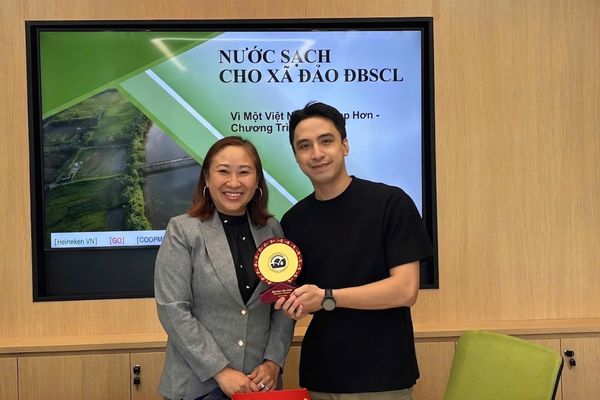
STARS WATER – Turning Wastewater into a Resource, Spreading Green Initiatives from Tra Vinh University
Eco-Park Wetlands project reaches the Top 3 of the UNESCO Water Challenge for Young Innovators 2025
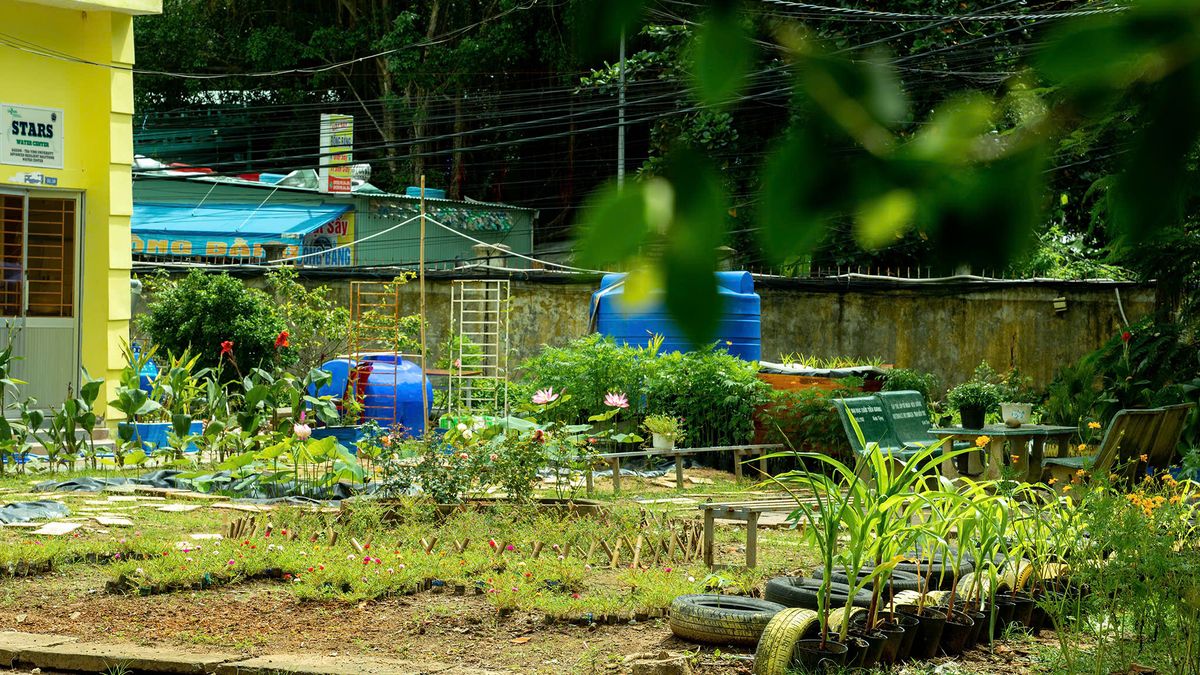
From an empty plot of land on the campus of Tra Vinh University, Team STARS WATER developed the idea of Eco-Park Wetlands: From Wastewater to Resource – A Green Flow for a Sustainable Future, transforming domestic wastewater and discarded materials into a meaningful model for water treatment, resource reuse, and environmental education.
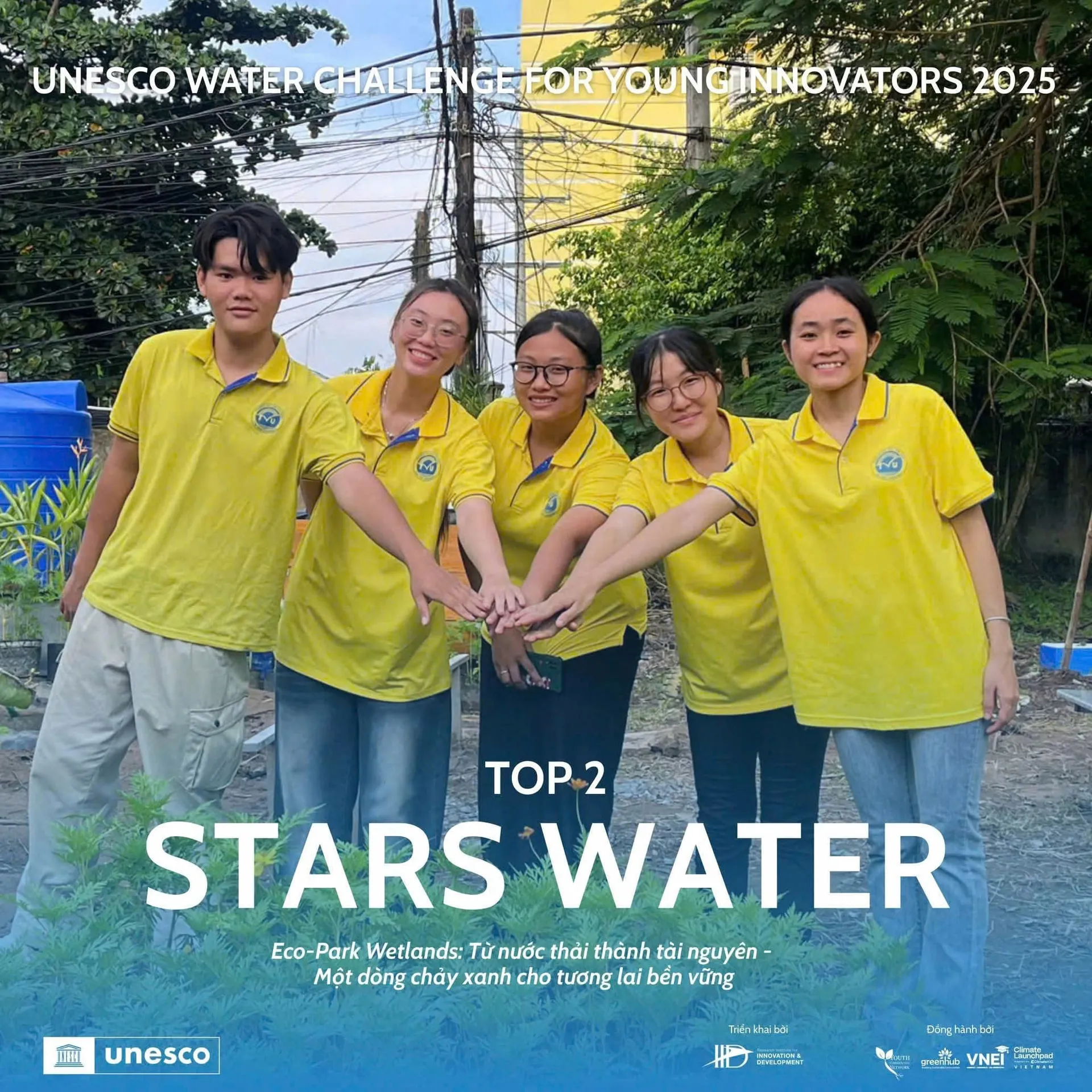
With this initiative, Team STARS WATER excellently surpassed 85 submissions nationwide and reached the Top 3 of the UNESCO Water Challenge for Young Innovators 2025, held at the United Nations Green One UN House in Hanoi. This achievement is not only a source of pride for students of Tra Vinh University but also affirms the innovative capacity of young people in the Mekong Delta in addressing issues related to water, the environment, and sustainable development.
Eco-Park Wetlands – Turning environmental challenges into green opportunities
In the context of domestic wastewater pollution and plastic waste remaining significant challenges, especially in rural areas and the Mekong Delta, Team STARS WATER posed a practical question: how can these “environmental burdens” be transformed into useful resources?
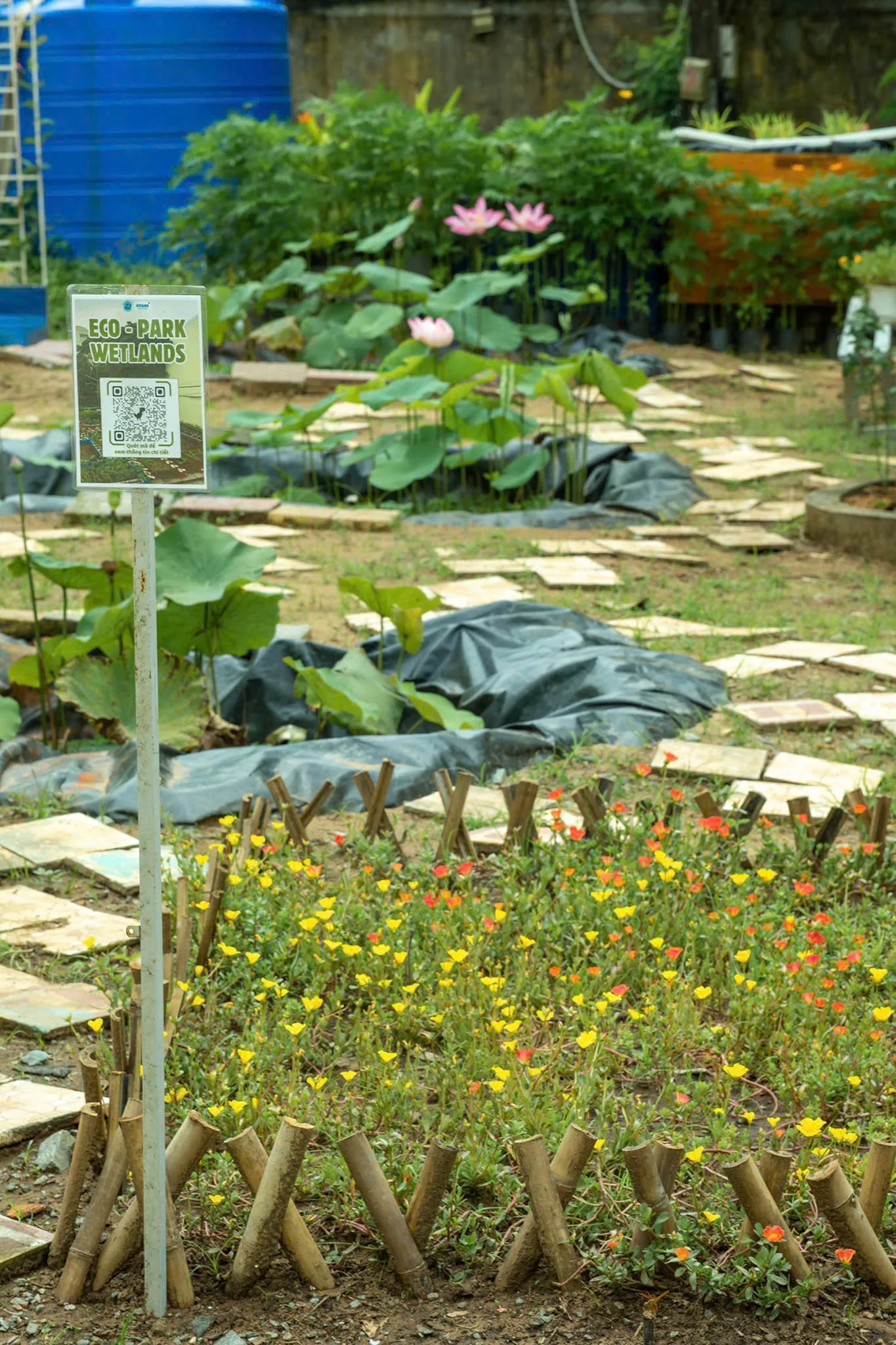
The team’s answer is the Eco-Park Wetlands model — a constructed wetland system that uses recycled materials as filter media, combined with native plant species such as pineapple plants, water hyacinth, bird of paradise, ornamental banana, and lotus to treat domestic wastewater.
As wastewater flows through the layers of materials and plant root zones, natural filtration processes help reduce organic matter, excess nutrients, and harmful bacteria. The treated water can then be reused for irrigation, contributing to water conservation and resource recovery.
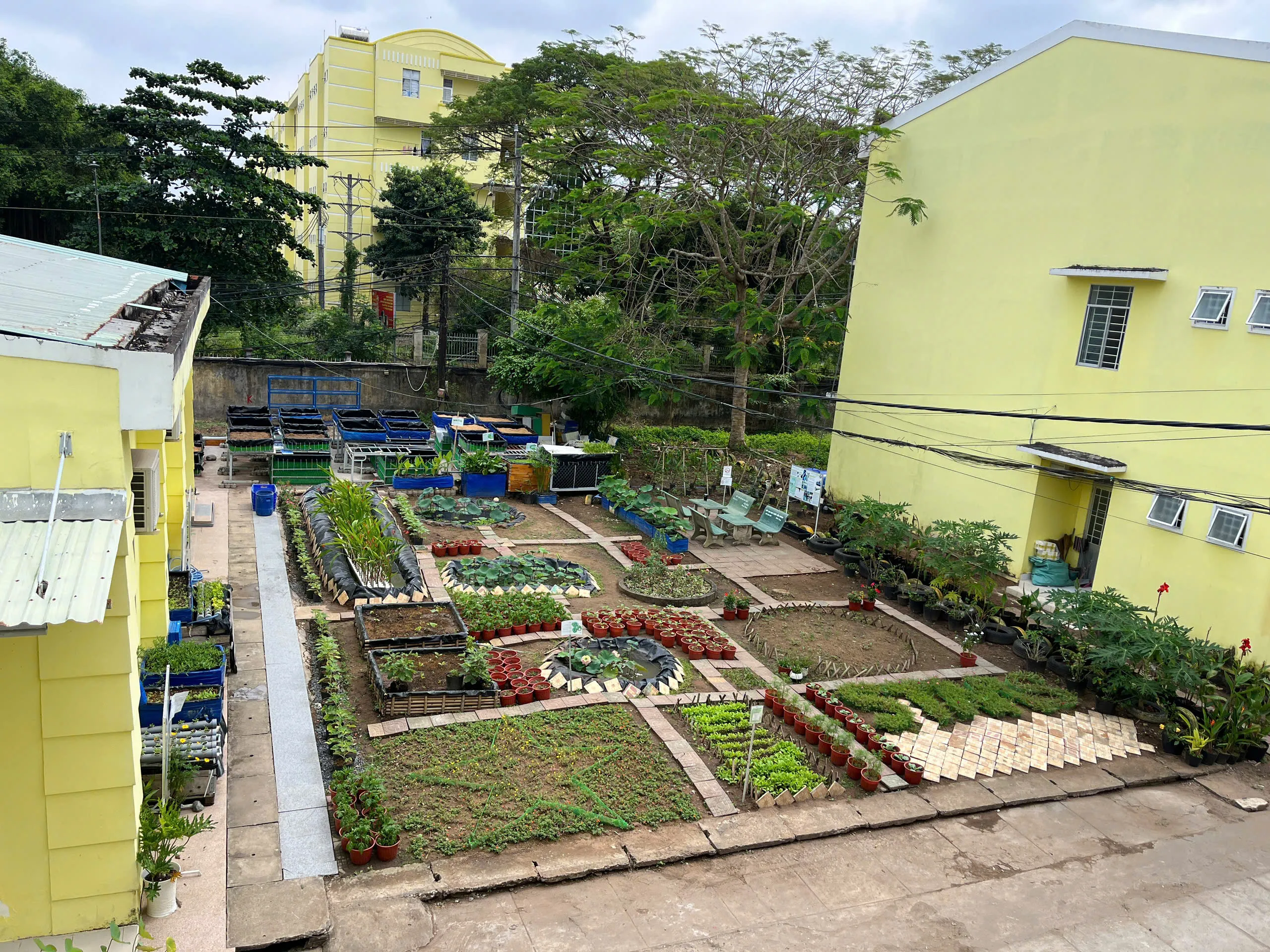
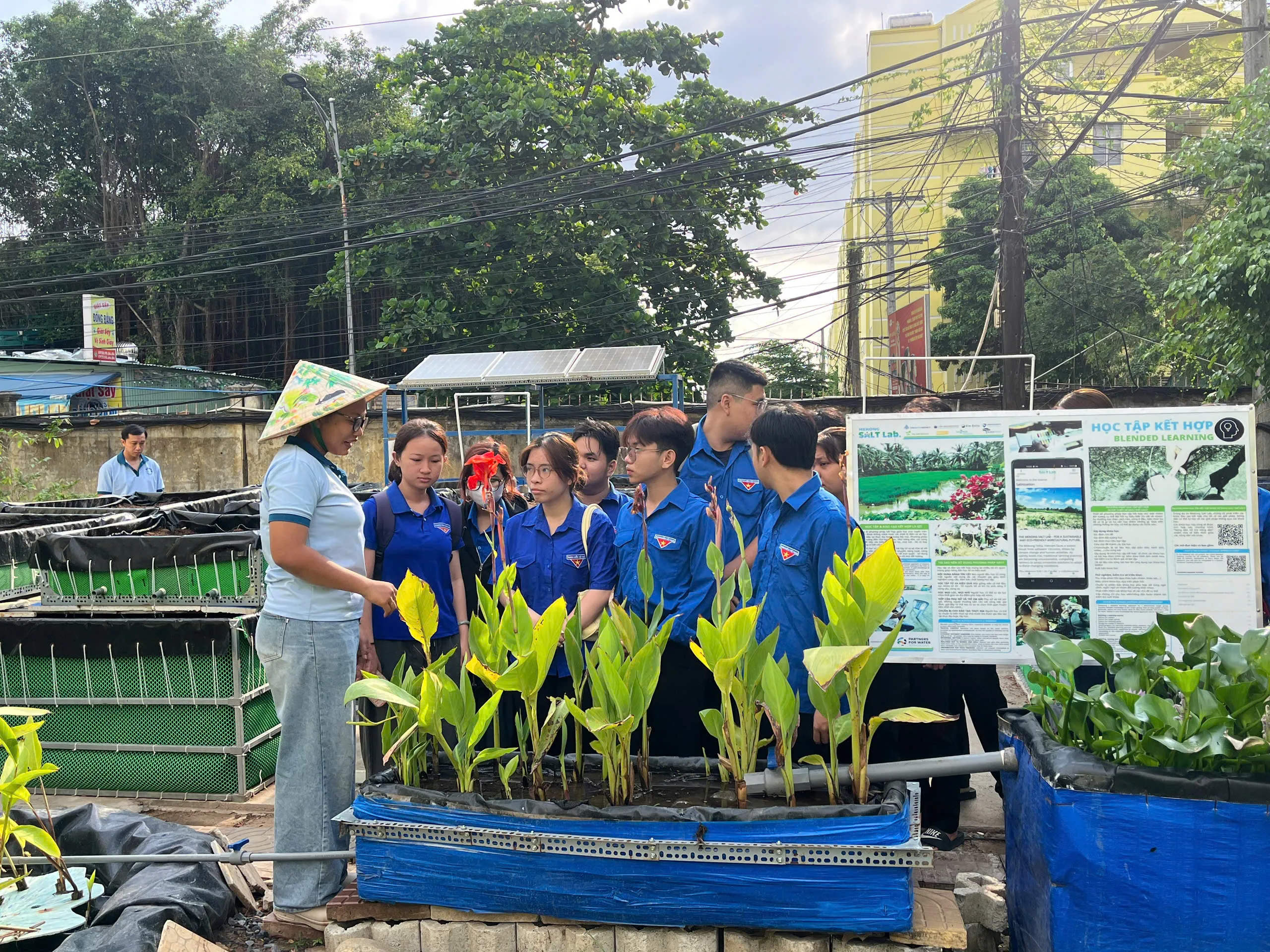
A distinctive feature of the model lies not only in its technical aspects, but also in the way the team integrates technology, education, and community values. Implemented in the area between Buildings C6 and C9 at Tra Vinh University, Eco-Park Wetlands has become a small-scale ecological space as well as an outdoor “open classroom” where students can directly observe the water cycle, wastewater treatment principles, and sustainable development thinking.
A green space for learning, experience, and community connection
Eco-Park Wetlands is designed not only as a wastewater treatment system, but also as a small ecological park within the university campus. Here, wastewater is treated through natural processes; plastic waste, tarpaulins, and foam boxes are repurposed into useful materials; and greenery creates a relaxing space for lecturers and students after class.
Through this model, students have the opportunity to access STEM knowledge through hands-on experience, from the structure of filter layers and the role of plants to the principles of waste treatment and the potential for reusing treated water.
This is a visual and practical approach that makes knowledge about water, the environment, and climate change more accessible and relatable to learners.
From an overlooked plot of land, Eco-Park Wetlands has become a vivid demonstration of students’ spirit of innovation: transforming wastewater into irrigation water, discarded waste into useful materials, and an empty space into a green area that serves the community.
Linked to the Sustainable Development Goals
The Eco-Park Wetlands initiative carries significant value when viewed in the context of the United Nations Sustainable Development Goals. The model contributes to SDG 6 – Clean Water and Sanitation through wastewater treatment and the creation of a safe irrigation water source; SDG 11 – Sustainable Cities and Communities by integrating green infrastructure into schools; SDG 12 – Responsible Consumption and Production through the reuse of discarded materials; and SDG 13 – Climate Action by strengthening adaptive capacity in response to drought, saltwater intrusion, and pressure on water resources in the Mekong Delta.
From a student-led initiative, Eco-Park Wetlands shows that sustainable development does not necessarily have to begin with large-scale infrastructure projects. It can also emerge from practical, locally appropriate solutions that are capable of spreading positive impact within the community.
Towards model replication
After the UNESCO Water Challenge for Young Innovators 2025, Team STARS WATER – TVU continued developing the project with the aim of bringing the model beyond the university campus and implementing it in the community. From the initial idea, the Eco-Park Wetlands model has been oriented for replication at Hoa Minh Secondary School and Hoa Minh Primary School in Vinh Long Province.
Implementing the model in schools helps expand the project’s impact from student research to the general education environment, where students can directly observe, learn, and raise their awareness of wastewater treatment, water reuse, and environmental protection. This is also an important step in transforming a competition initiative into a practical solution connected to the needs of the local community.
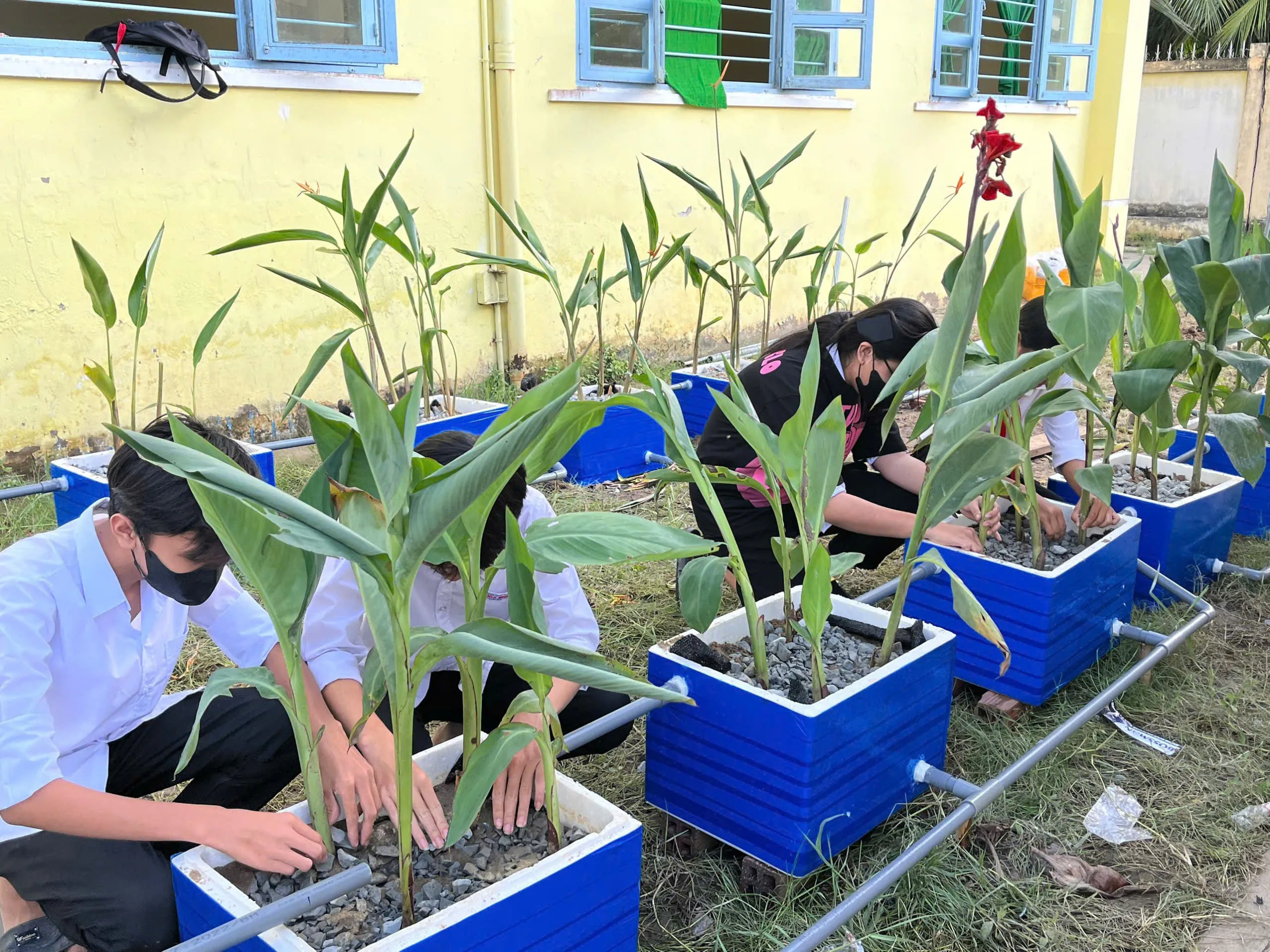
At schools, the constructed wetland model not only contributes to wastewater treatment and the reuse of treated water for irrigation and green space maintenance, but also creates a visual learning space about water, the environment, and climate change adaptation.
Through this model, students have more opportunities to access knowledge about water resources, the circular economy, and sustainable development right within their own school campus.
.webp)
The replication of Eco-Park Wetlands at Hoa Minh Secondary School and Hoa Minh Primary School demonstrates the model’s application potential in educational institutions, especially in rural and island commune areas. From a student-led initiative, the project is gradually becoming a practical community-based solution that contributes to reducing wastewater pollution, conserving water resources, and spreading environmental awareness among the younger generation.
STARS WATER – A youth imprint in innovation for water and the environment
The Top 3 achievement at the UNESCO Water Challenge for Young Innovators 2025 is a well-deserved recognition of Team STARS WATER’s efforts in researching, testing, and developing a highly applicable environmental solution. It also demonstrates the capacity of Tra Vinh University students to identify local challenges, propose creative solutions, and connect their ideas with global Sustainable Development Goals.
The STARS Water Center – Tra Vinh University is proud to accompany young people in learning, research, and innovation in the fields of water, environment, and climate change adaptation. The success of STARS WATER motivates the Center to continue promoting applied research, experiential learning, and the development of practical models that serve the community.
From wastewater into a resource, from waste materials into useful components, and from a student idea into an initiative recognized at national and international levels, Eco-Park Wetlands is truly a green flow of knowledge, responsibility, and aspiration to contribute to a sustainable future.
-600x400.jpg)